
The world is scrambling for US diesel — and America's own tanks are near a 30-year low
Europe's diesel trades near $167 a barrel and the US crack has topped $100 for the first time; record exports are draining stocks that just hit their lowest seasonal level since 1996.
The global diesel market is tightening. With Russian refineries under sustained attack and shipping through the Strait of Hormuz disrupted, major buyers in Europe, Brazil and Turkey have begun competing for limited cargoes — and the United States has become the world's key swing supplier.
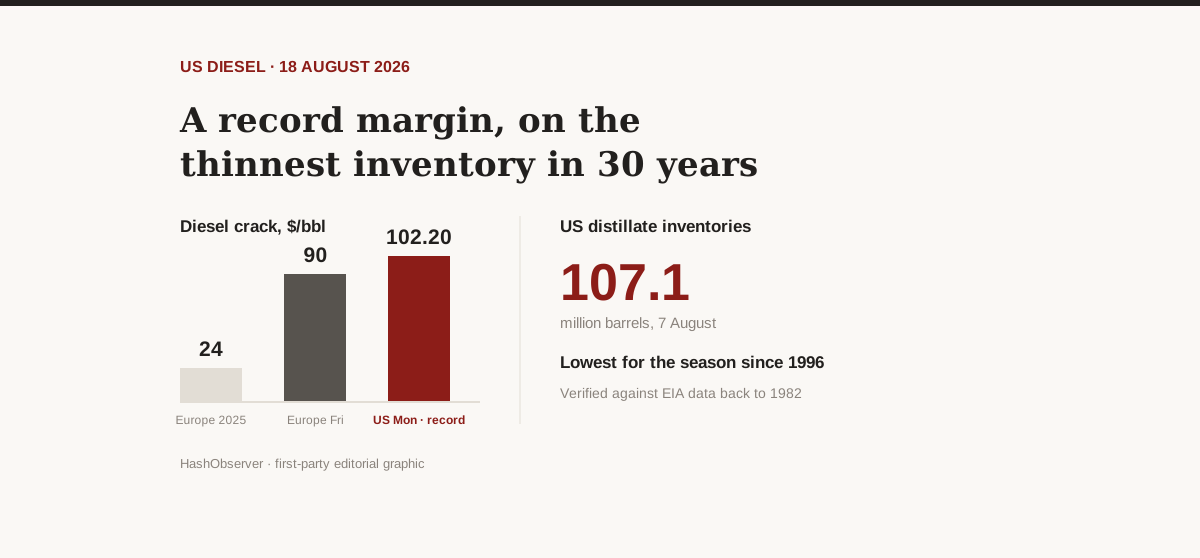
Per price-reporting agency OPIS, a Dow Jones company, Europe's benchmark diesel price climbed to about $167 a barrel over the weekend, versus roughly $87 a year ago. The northwest-Europe diesel crack — diesel's premium over crude — reached about $90 a barrel on Friday, against an average of $24 last year.
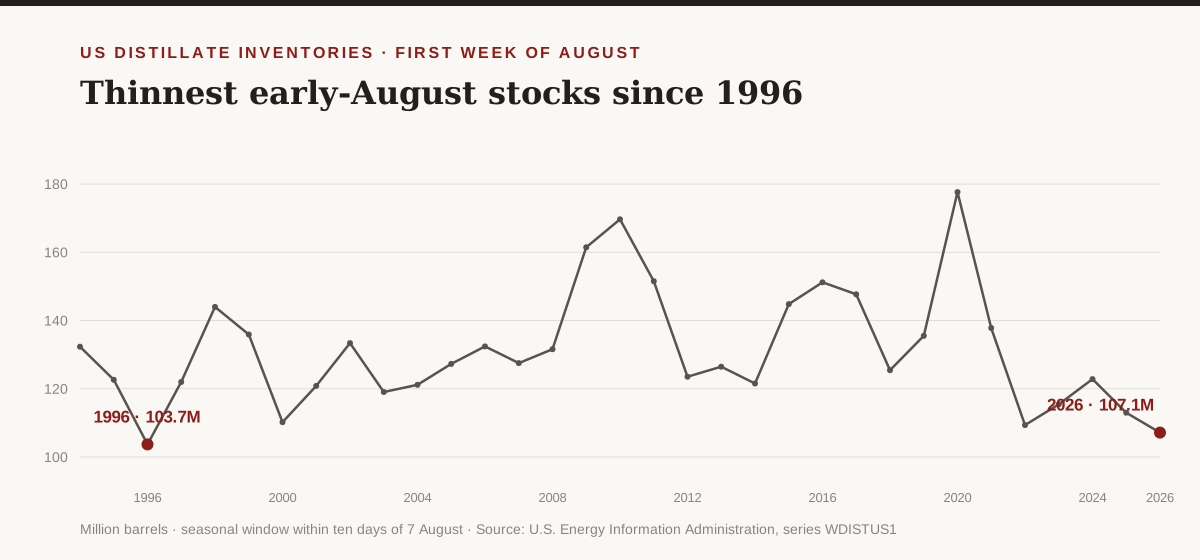
Pressure is just as visible in the US, where the diesel crack broke above $100 a barrel for the first time on record, touching $102.20 on Monday. EIA's weekly series puts US distillate inventories at 107.1 million barrels as of 7 August. Checked against the full series back to 1982, only one earlier year sits lower in the same seasonal window: 1996, at 103.7 million.
Shrinking global refining capacity is compounding the squeeze. IEA data puts global refinery runs at about 80.9 million barrels a day this month, down roughly 5 million from a year earlier — leaving little spare capacity to close the gap quickly.
Reduced Russian supply is a key driver. Russia was one of the world's largest exporters of refined products, but with Ukrainian strikes hitting its refineries, Moscow has cut fuel production and restricted diesel exports, with curbs expected to last through year-end.
That has pushed importers like Brazil and Turkey into direct competition with European buyers for replacement cargoes from the US and India.
The Middle East adds a further layer of risk: with US-Iran talks stalled, markets worry about deeper disruption to the Strait of Hormuz, a conduit for large volumes of Gulf crude and refined products.
With other sources constrained, Europe leans increasingly on US diesel exports. US refiners are using strong margins to expand overseas sales: in the first week of August, US distillate exports — diesel, heating oil and related products — hit 1.9 million barrels a day, the highest weekly figure on record.
But heavy exports are eroding America's own buffer. Bank of America analysts say the US, as the market's main open supply hub, is draining tight stocks through exports and fuelling a global scramble.
Refinery trade-offs and the calendar add pressure: jet fuel and diesel are both middle distillates, so a summer tilt toward jet fuel tightened diesel further — just as harvest demand lifts northern-hemisphere consumption, winter heating follows, and seasonal maintenance can cut supply again. Costlier diesel feeds straight into trucking, construction, marine fuel and heating, and from there into logistics, food and building costs.
Goldman Sachs warns diesel faces a higher risk of sustained shortage than crude heading into winter. Bank of America says the market is entering its strongest demand phase with almost no room for error.
Demand is also slow to fall. Freight operators cannot swap out diesel fleets in the short run and farmers cannot stop using diesel mid-harvest, so higher prices do little to curb consumption — a point Sparta Commodities senior oil analyst June Goh makes about industrial fuels generally: with few substitutes, demand stays firm even as retail prices rise.
Where the market goes next depends on whether disruptions ease. If Russian refining and exports recover, or Middle East shipping normalises, diesel pressure could subside; otherwise global buyers will keep leaning on US refiners, and the competition will continue.