
Weekly Briefing №1: the barrel repriced the curve, and now the calendar gets its say
In four sessions around a speech and an oil shock, the market settled how it intends to trade September: through the front of the US yield curve. The two-year moved nineteen basis points, gold gave back 4.7 percent, crypto fell in beta order, and the dollar firmed — all before a single piece of September data has printed. Between Friday's jobs report and the Bank of Japan's decision on the 18th, the calendar now supplies the evidence the move has been trading without.
Reporting sourcesKevin Warsh — remarks at the Jackson Hole economic symposium, 28 August 2026, published by the Federal Reserve and read directly at source on 2 September 2026; used here only to anchor the 27 August pre-speech market closeU.S. Department of the Treasury — Daily Treasury Par Yield Curve Rates, 2026 series, as recorded for the desk's 2 September research package; the 27 August and 1 September rows for the two-year (4.20 to 4.39 percent) and thirty-year (5.19 to 5.27 percent) yieldsMinistry of Finance, Japan — daily JGB yield table, as retrieved for the desk's 28 August file and re-used in the 2 September window batch; the 21 to 27 August changes of +1.4 basis points at two years, +3.6 at five, +1.5 at ten, -0.4 at thirty and -2.6 at fortyLondon Bullion Market Association — published gold price series, afternoon auction, as recorded for the desk's 2 September research package; the 26 August $4,631.50 fixing, and the fall from $4,568.95 on 27 August to $4,353.15 on 1 SeptemberPrimerIQ — Closing Wrap for 1 September 2026, as verified for the desk's 2 September research package; Brent $95.26 (+5.27%) and WTI $90.77 (+5.84%) with the Hormuz attribution, the dollar index 99.68 (+0.26%), EUR/USD 1.1596, USD/JPY 160.19, the S&P 500 -0.71%, gold -1.32%, bitcoin -1.52%, ether -1.98%, XRP -2.14%, solana -3.10%, VIX 16.34 (+9.52%), MOVE 75.32 unchanged, and the August ISM manufacturing readings 54.6, 53.7 and 71.1U.S. Bureau of Labor Statistics — official 2026 release schedule for September, as verified for the desk's 2 September research package; Employment Situation 4 September, PPI 10 September, CPI 11 September, each 8:30 a.m. ETBoard of Governors of the Federal Reserve System, U.S. Census Bureau and U.S. Bureau of Economic Analysis — published 2026 calendars, as verified for the desk's 2 September wave; the FOMC meeting of 15-16 September with a Summary of Economic Projections, advance retail sales for August on the 16th at 8:30 a.m. ET, and Personal Income and Outlays for August on 30 SeptemberBank of England and Bank of Japan — published 2026 meeting schedules, as verified for the desk's 2 September window batch; the Bank of England's Summary-and-minutes round of 17 September at 12pm London with the July 6-3 vote at 3.75 percent and the $84 Brent conditioning level of 28 July, and the Bank of Japan's 17-18 September meeting with July's 8-1 vote at around 1.0 percentTether — Q2 2026 attestation announcement, as verified for the desk's 2 September stablecoin batch; excess reserves of $4.11 billion on 30 June against $8.23 billion on 31 March

Between the close on 27 August — the last before Kevin Warsh spoke at Jackson Hole — and 1 September, when tanker strikes in the Strait of Hormuz sent Brent to $95.26, the US two-year yield rose from 4.20 to 4.39 percent while the thirty-year moved from 5.19 to just 5.27: nineteen basis points at the front of the curve against eight at the back, on the Treasury's own daily table. An inflation scare that flattens the curve is a market betting that the central bank will act, not that it will be overrun — and most of what happened elsewhere last week follows from that bet.
Japan's curve moved the same way. On the Ministry of Finance's daily table, two-year JGBs rose 1.4 basis points over the last recorded week of August and five-years 3.6, while thirty-years slipped 0.4 and forty-years 2.6. On both sides of the Pacific the short maturities carried the repricing and the long ends declined to follow — front ends preparing for policy, long ends still unconvinced there is a story.
The dollar backed the same reading. The index closed 1 September at 99.68, up 0.26 percent, with the euro at 1.1596 and the yen at 160.19; a currency that strengthens into an oil shock is pricing the shock as future tightening rather than future damage. The yen's level matters twice over, because the Bank of Japan meets on the 17th and 18th: July's vote to hold at around 1.0 percent was 8-1, and 160 is where the dissenter's arithmetic keeps landing. The Bank of England announces the morning before — a count-only round on the 17th, no forecast until November — from a committee that split 6-3 in July while conditioning its outlook on Brent at $84. The same barrel now trades eleven dollars higher, and that gap is what the committee will have to talk around.
Equities and volatility never endorsed the move. The S&P 500 lost 0.71 percent on the day of the strikes; the VIX rose to 16.34, a level short of anything resembling stress; and the MOVE index, the bond market's own volatility gauge, finished unchanged at 75.32. The August ISM survey explains some of the reserve: manufacturing at 54.6, down from 55.6, new orders at 53.7, the prices index stuck at 71.1. Demand is cooling while costs stay sticky, and that mixture rarely produces a hike.
Gold traded as an asset discounted off the front end, not as a haven. The afternoon fixing reached $4,631.50 on 26 August, then fell from $4,568.95 to $4,353.15 between the 27th and 1 September — 4.7 percent across three auctions, with the steepest leg on the day oil spiked. Until the dollar softens while yields are still rising, the metal is trading rates, not fear.
Crypto fell the same way with more leverage: on the shock session bitcoin lost 1.52 percent, ether 1.98, XRP 2.14 and solana 3.10, declines ordered by beta rather than by panic. The week's quieter crypto story runs through the plumbing. The attested cushion behind the largest dollar stablecoin halved between the March and June statements, from $8.23 billion to $4.11 billion, months ahead of a US reserve law that reaches full force in January 2027 and never required a cushion at all — and the short Treasury bills backing that float are the very instruments the Federal Reserve's meeting is about to reprice.
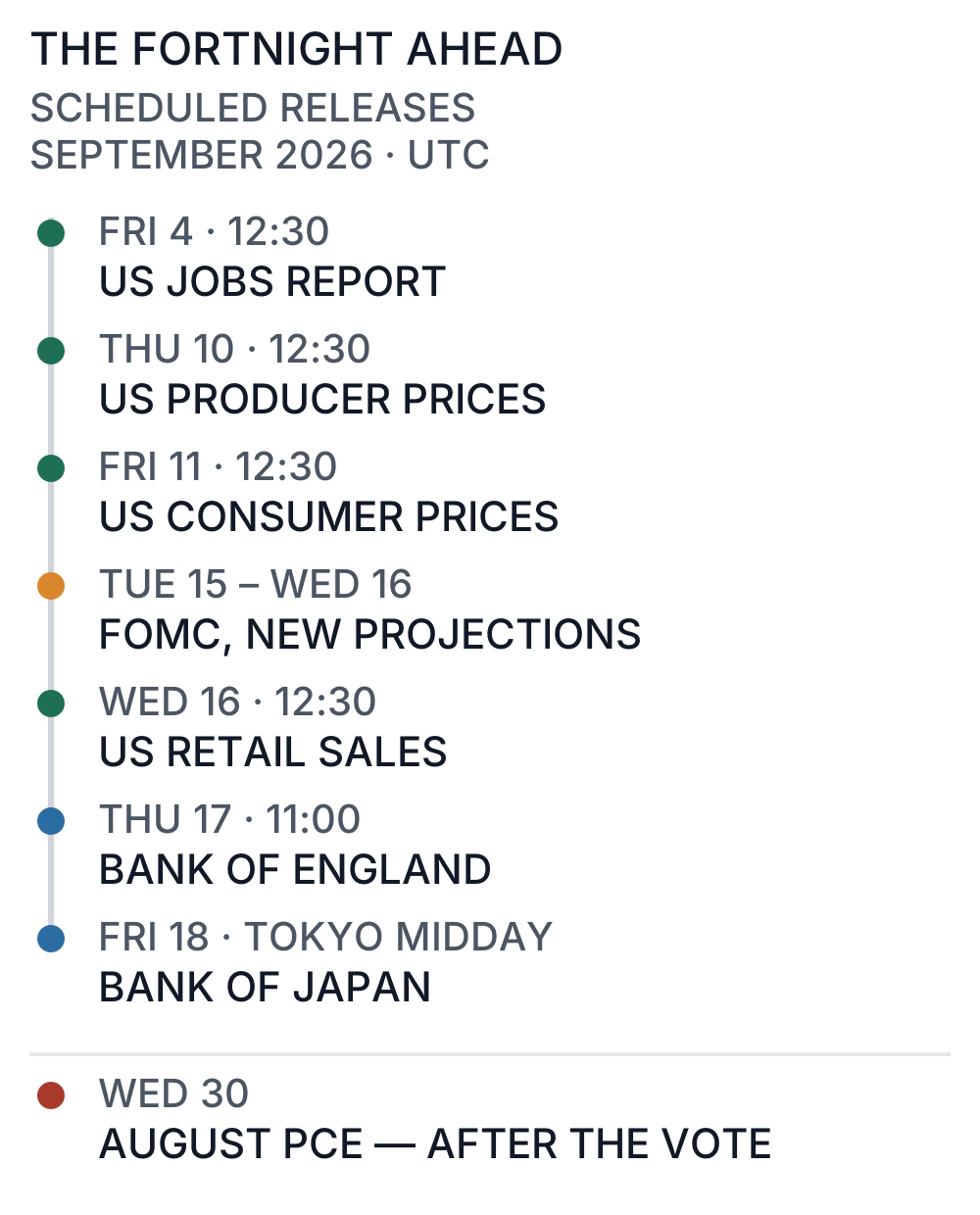
From here the guesswork gives way to a schedule. The August jobs report prints Friday the 4th at 12:30 UTC; producer prices follow on the 10th and consumer prices on the 11th; the Federal Open Market Committee meets on the 15th and 16th and publishes a fresh projection round, with advance retail sales landing at 8:30 Washington time on decision morning itself; the Bank of England announces on the 17th and the Bank of Japan on the 18th. The measure the Fed actually targets sits outside the whole sequence — August's PCE index arrives on 30 September, after every decision it might have informed.
Friday carries the most weight of those dates. The jobs report is the only labour evidence the Committee receives before it votes, and the front end's nineteen basis points were priced without it; a strong print ratifies the move, a weak one starts taking it back, and the argument running inside the report itself — two surveys that have disagreed for half a year — is a story of its own. From 12:30 UTC on Friday, the repricing stops trading on a speech and a barrel and starts trading on data.