
Warsh told markets to expect fewer promises. They priced a September hike anyway
The new Fed chair used Jackson Hole to retire routine forward guidance. Traders still heard a clear message: inflation is too high, financial conditions are not restrictive and the next move may be up. The front of the Treasury curve moved first.

Kevin Warsh had barely finished explaining why the Federal Reserve should speak less when markets supplied the sentence he had refused to say. The two-year Treasury yield jumped from about 4.22% to 4.35%, and the probability attached to a September rate increase rose from roughly 35% to 58%, according to the Associated Press account of Friday's trading. A speech against habitual forward guidance became the most forceful piece of guidance of the week.
That apparent contradiction is the point of Warsh's Jackson Hole debut. He did not promise a September increase. He promised a different reaction function. In the published text, the chair said forward guidance had “overstayed its welcome,” argued that the central bank should be quieter between meetings and restated the 2% PCE inflation target without qualification. Short-term interest rates, he said, remain the predominant instrument. The Fed would offer fewer verbal assurances and ask markets to infer more from incoming data and the principles behind each decision.
The principles were restrained; the diagnosis was not. Warsh described an economy that had strengthened, a labor market consistent with full employment and broad financial conditions that were not restrictive. He put twelve-month PCE inflation at 3.7% and the six-month pace at 4.1%. The softer readings seen during the summer, he warned, did not establish a material improvement in the underlying trend. For a market that had been debating whether the next policy move would be a cut or a long pause, those sentences narrowed the distribution of outcomes without the chair ever naming one.
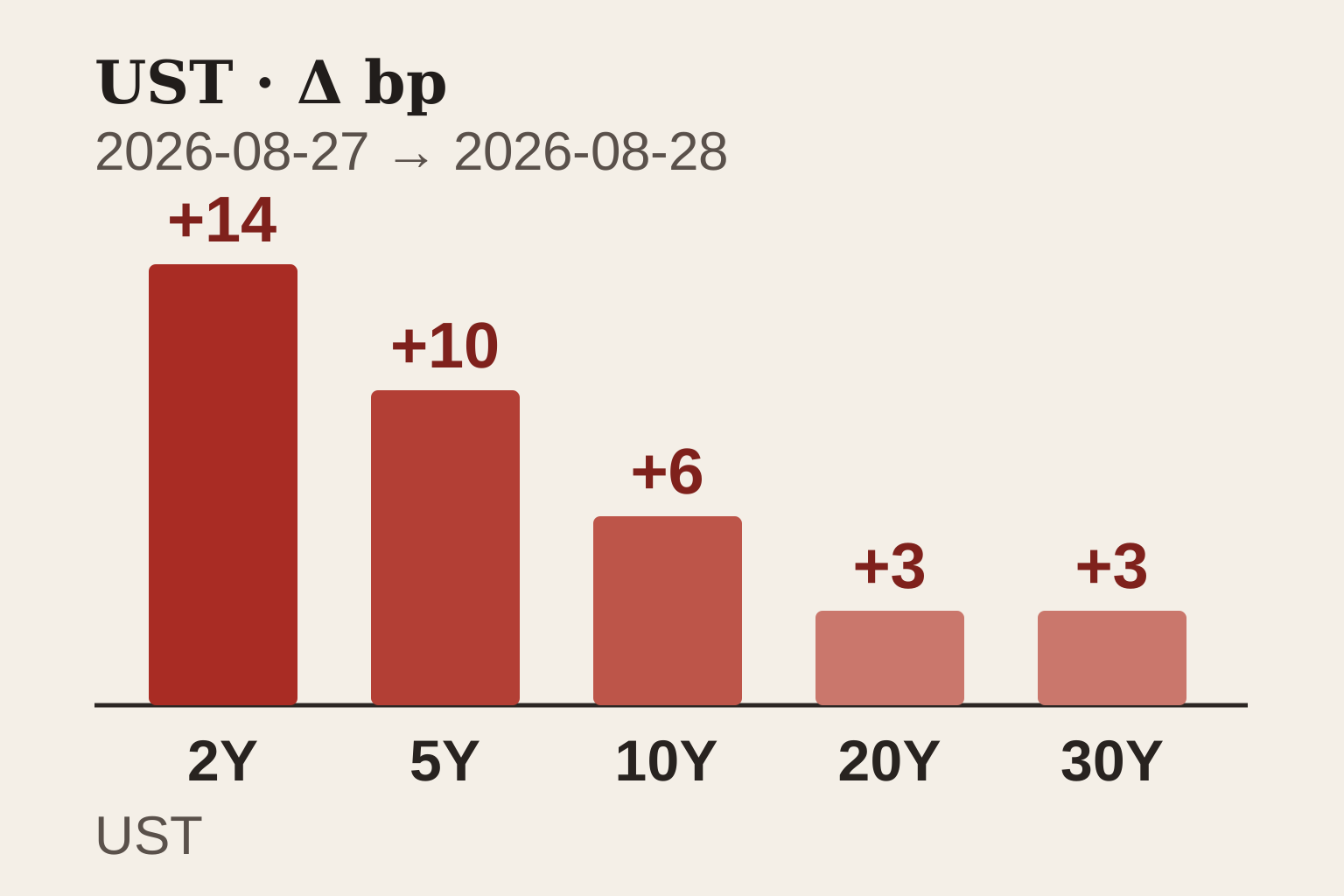
The official yield curve shows where that information landed. Between Thursday and Friday, the Treasury's daily par yields rose from 4.20% to 4.34% at two years, from 4.38% to 4.48% at five years and from 4.67% to 4.73% at ten years. The twenty-year moved from 5.18% to 5.21%; the thirty-year from 5.19% to 5.22%. In basis points, the sequence is plus 14, plus 10, plus 6, plus 3 and plus 3. This was not a broad revolt against American duration. It was a front-end-led flattening: the maturities most exposed to the next several Fed decisions absorbed most of the shock.
That shape matters more than the headline level. A parallel rise could have been blamed on term premium, fiscal supply or a global bond sell-off. A two-year yield rising more than four times as much as the thirty-year is a more specific price. It says traders revised the expected policy path while changing their long-run compensation far less. Warsh wanted decisions to be read through data rather than choreography; the curve immediately treated his assessment of those data as a policy event.
Other markets confirmed the direction. PrimerIQ's close record showed the dollar index up 0.53%, gold down 2.24% and bitcoin down 3.56%, while the S&P 500 fell 0.25% and the Nasdaq 0.52%. Those moves do not prove a September decision, but they are consistent with the same repricing: a higher near-term dollar rate makes non-yielding assets less attractive and raises the discount rate applied to risk. The reaction also travelled beyond the corner of the bond market where a single speech can be dismissed as positioning noise.
There is a limit to what Friday settled. Warsh ended by committing the institution to discipline, not by committing the committee to a vote. A probability near 58% is still divided, and the chair's preference for less guidance makes the remaining economic releases more, not less, important. Inflation could cool, employment could weaken or financial conditions could tighten before the meeting. Any of those would change the price without requiring the Fed to reverse a promise, because no promise was made.
The durable change is therefore not simply that one more hike entered the curve. It is that the cost of waiting for reassurance has risen. Under routine guidance, a weak data point could be weighed against a well-telegraphed path. Under Warsh's proposed regime, each release must carry more of the argument by itself. Friday's market did not reject the chair's request for fewer words. It demonstrated what fewer words cost: fourteen basis points at the front of the curve, a stronger dollar and a meeting that now begins before officials enter the room.