
Trump dismisses dire conditions aboard the Lincoln. Why is the US carrier struggling to stay supplied?
The USS Abraham Lincoln has spent nearly nine months at sea. Damage to a key US naval hub in Bahrain has pushed its supply line thousands of kilometres farther into the Indian Ocean.
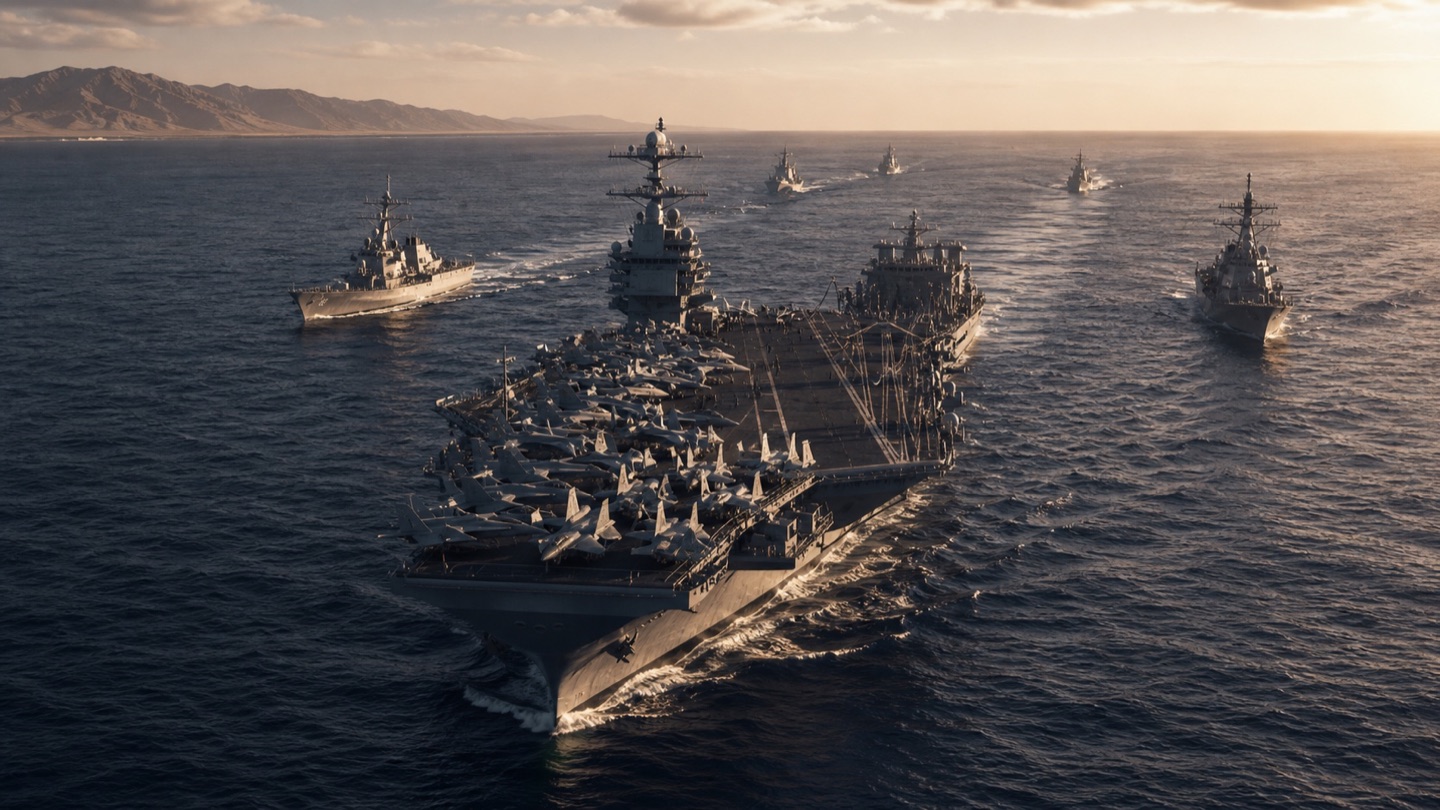
US President Donald Trump on the 14th dismissed reports of dire conditions aboard the USS Abraham Lincoln. The carrier has been deployed for more than eight and a half months, much of that time in support of US military operations against Iran. Asked whether its deployment had gone on too long, Trump said it had been "not nearly long enough."
The prolonged deployment has left the Lincoln facing a series of problems, including shortages of basic supplies, safety and sanitation concerns, and worsening mental health among crew members. US media had previously reported widespread low morale and exhaustion. Military Times reported on the 11th that at least two sailors had attempted to take their own lives by jumping overboard.
According to Xinhua, Trump confirmed on the 14th that the Lincoln would be replaced after questions were raised over living conditions and crew mental health during its long deployment in the Middle East.
An unnamed US official said the Navy planned to send the USS George Washington to relieve the Lincoln. The carrier passed westward through the Strait of Malacca earlier this week on its way to the Middle East.
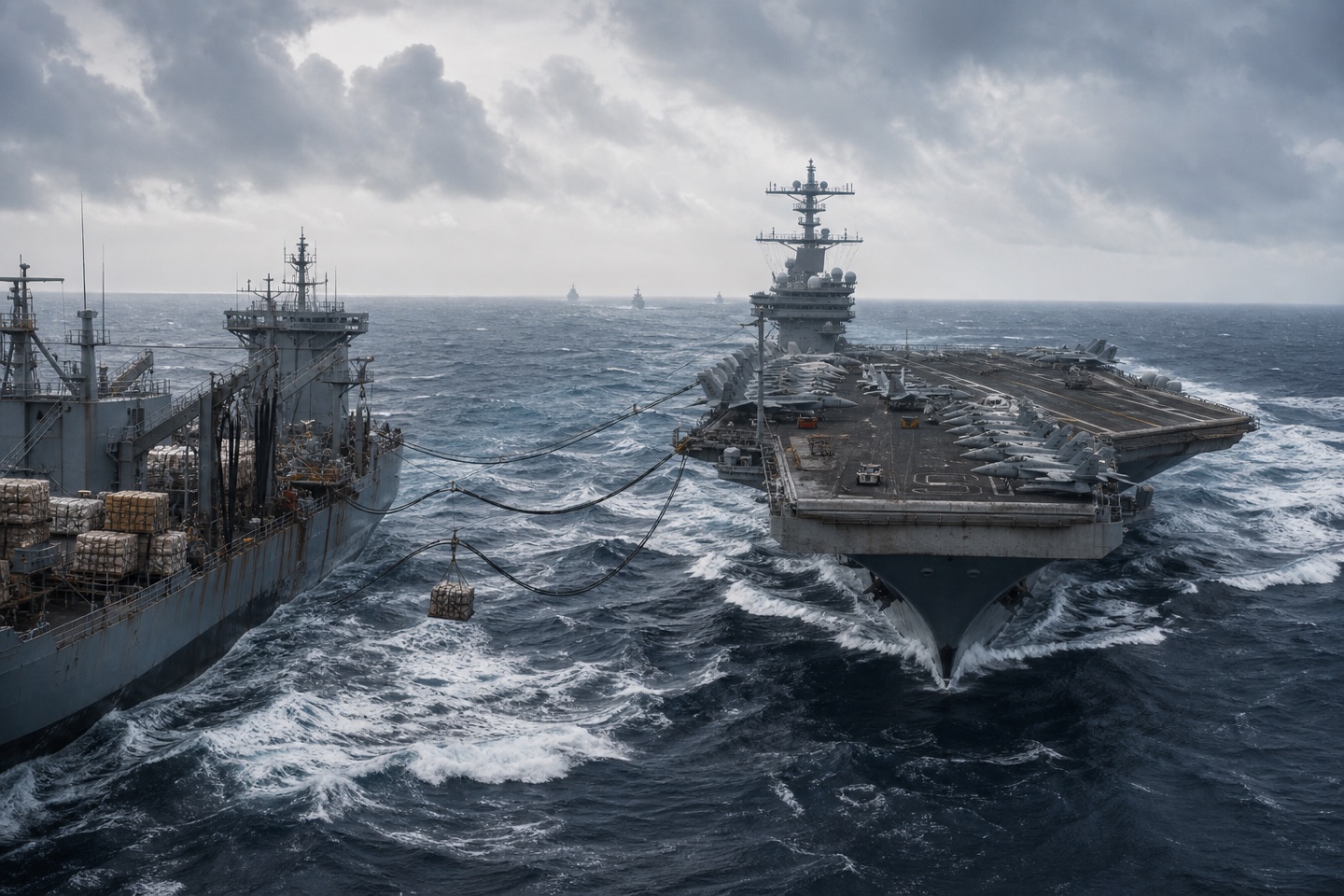
At the same time, US media said the Lincoln's supply problems were largely the result of Iranian missile and drone strikes on US naval facilities in the Middle East. The United States has since had to rely on Diego Garcia, about 3,500 kilometres away, for supplies.
Damage to a US naval base disrupts supplies
Former US naval officer John Ismay told The New York Times that the Lincoln's supply difficulties had emerged soon after the US-Israel-Iran war began. Iranian missiles and drones destroyed much of the US naval base in Bahrain, leaving unavailable a logistics hub on which the US Navy had depended for decades.
Bahrain hosts the headquarters of the US Fifth Fleet and one of the two ports normally used by US aircraft carriers in the Middle East. The other, the UAE port of Fujairah on the Gulf of Oman, is also fully within range of Iranian missiles.
An unnamed US military official said the Navy began using Diego Garcia as its primary logistics centre soon after the Bahrain base was badly damaged. The British-controlled base lies south of the Maldives, but it is 3,500 kilometres from where US carrier strike groups operate in the Gulf of Oman. That distance has contributed substantially to the carriers' supply problems.
Early in the war, then British prime minister Keir Starmer refused a US request to use Diego Garcia to launch military strikes against Iran, a decision that angered Trump. Starmer ultimately relented on March 1, allowing the US military to access the island for "specific and limited defensive purposes."
Diego Garcia's use as a new naval logistics hub may explain why Iran fired two medium-range ballistic missiles at the island on March 20. One fell into the Indian Ocean without hitting its target; the other was intercepted by a naval vessel.
Trump again plays down the cost of war
The San Diego-based Lincoln has been at sea for nearly nine months. A typical peacetime US Navy deployment lasts six months. The carrier has also gone more than 200 days without a port call, a record for a modern carrier's continuous time at sea. Its crew has therefore been unable to go ashore for the rest they would normally receive.
When a reporter said crew members' families were concerned, Trump replied: "No, they're not concerned." Asked whether he was worried about the sailors' mental health and whether the deployment had gone on too long, he said: "No, no, no. Not nearly long enough."
US Defense Secretary Pete Hegseth also rejected reports of poor conditions aboard the Lincoln earlier this week, saying the situation had been "distorted," but he did not offer a detailed response.
The New York Times said Trump's remarks once again played down the consequences of his decision to attack Iran. At least 18 US service members were killed during the war and hundreds were wounded. Trump compared those casualties with longer and deadlier conflicts such as the Vietnam War to argue that US losses in the Iran conflict were relatively limited.
Democratic Senator Richard Blumenthal wrote in a letter on the 13th: "There are extensive reports of shortages of basic supplies, contaminated water, plumbing problems, worsening mental health conditions, safety hazards on the flight deck and disruptions to the mail system that have left many packages bound for the ship missing in transit for months."
Later on the 14th, speaking at an event in Garden City, New York, Trump continued to defend the war and tout its progress. "I will soon announce that the Strait of Hormuz is American territory," he said. As he has before, Trump argued that preventing Iran from obtaining nuclear weapons justified the cost borne by Americans. "So remember, even if you have to pay a little more, say four dollars, that's all right."