
U.S. consumers hit the brakes as retail sales post their sharpest drop in more than a year
July retail sales fell 0.6%, but the details point to a loss of momentum rather than a sudden collapse in household finances.

U.S. retail sales weakened unexpectedly in July, adding to signs that consumer spending may be cooling and complicating the outlook for economic growth.
Sales fell 0.6% from June, the largest monthly decline since May last year. Economists had expected a 0.1% increase, while the previous month's reading was a 0.2% gain.
The dollar index fell to a one-week low of 99.506 after the release. Spot gold briefly rose to an intraday high of 4,387.01. Market pricing also showed a lower probability that the Federal Reserve would raise rates more than once before the middle of 2027, after two softer inflation reports had already reduced tightening bets.
Retail sales are a closely watched measure of consumer demand, which accounts for a large share of U.S. economic activity. The headline decline therefore raised concerns that growth could face greater pressure.
The weakness was not confined to one category. Sales excluding autos and gasoline still fell 0.2%. Five of the 13 retail categories declined, with motor-vehicle and parts dealers down 1.8% and nonstore retailers down 2.2%.
Restaurants and bars were an exception, rising 0.5%. That was the only service category in the report and suggests households were not cutting spending across the board.
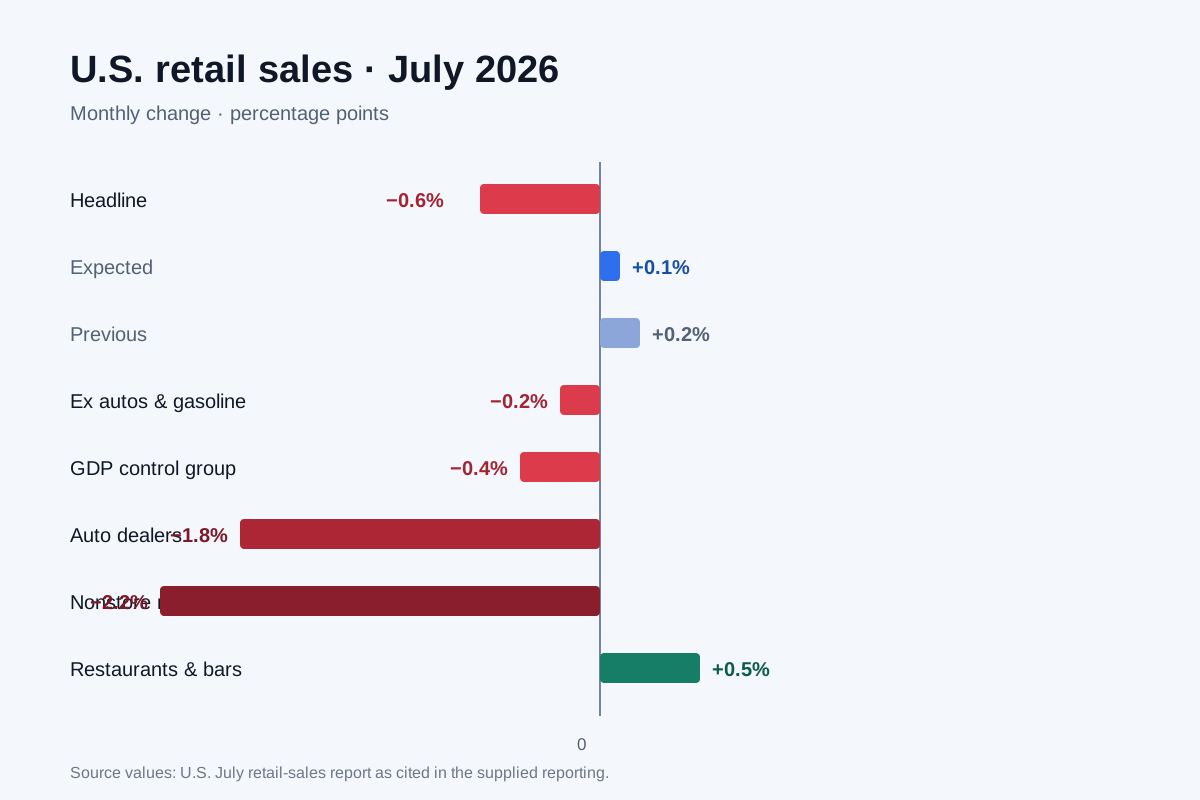
The GDP-linked retail control group was more notable. It fell 0.4%, the steepest decline since early 2025. The measure excludes restaurants, auto dealers, building-material stores and gasoline stations, making it a cleaner gauge of underlying goods consumption.
The report suggests that spending momentum slowed after a strong first half of 2026. Large tax refunds had provided a temporary boost earlier in the year, but that support has faded. The personal saving rate also fell in June to its lowest level in four years, leaving households with less room to keep increasing expenditure.
Some of July's weakness may reflect timing rather than a lasting break. Amazon moved Prime Day from July to June this year, pulling some online spending forward. The World Cup also lifted activity in June, creating a higher comparison base for July.
Card data from Bank of America and PNC Financial Services likewise showed slower spending growth in July, while indicating that household balance sheets remained relatively sound. Bank of America Institute said savings were still above pre-pandemic levels and that a growing share of consumers could pay their credit-card bills in full.
For now, the July report looks more like a loss of momentum than a sudden deterioration in household finances. If retail sales continue to weaken in coming months—particularly the control group—markets will have to reassess the resilience of U.S. consumption and the risk of a broader slowdown.